The key principle is:
Sound isolation keeps unwanted sound out and programme sound in. Acoustic treatment controls what happens to sound inside the room.
For a professional broadcast facility, the design should be based on measurable acoustic performance rather than simply specifying materials.
The principal performance parameters should include:
| Parameter | Recommended broadcast target |
|---|---|
| Partition isolation | STC/Rw 55–65+ depending on adjacency |
| Studio-to-studio isolation | STC/Rw 60+ preferred |
| Control room isolation | STC/Rw 55–60+ |
| Audio/VO booth isolation | STC/Rw 60+ |
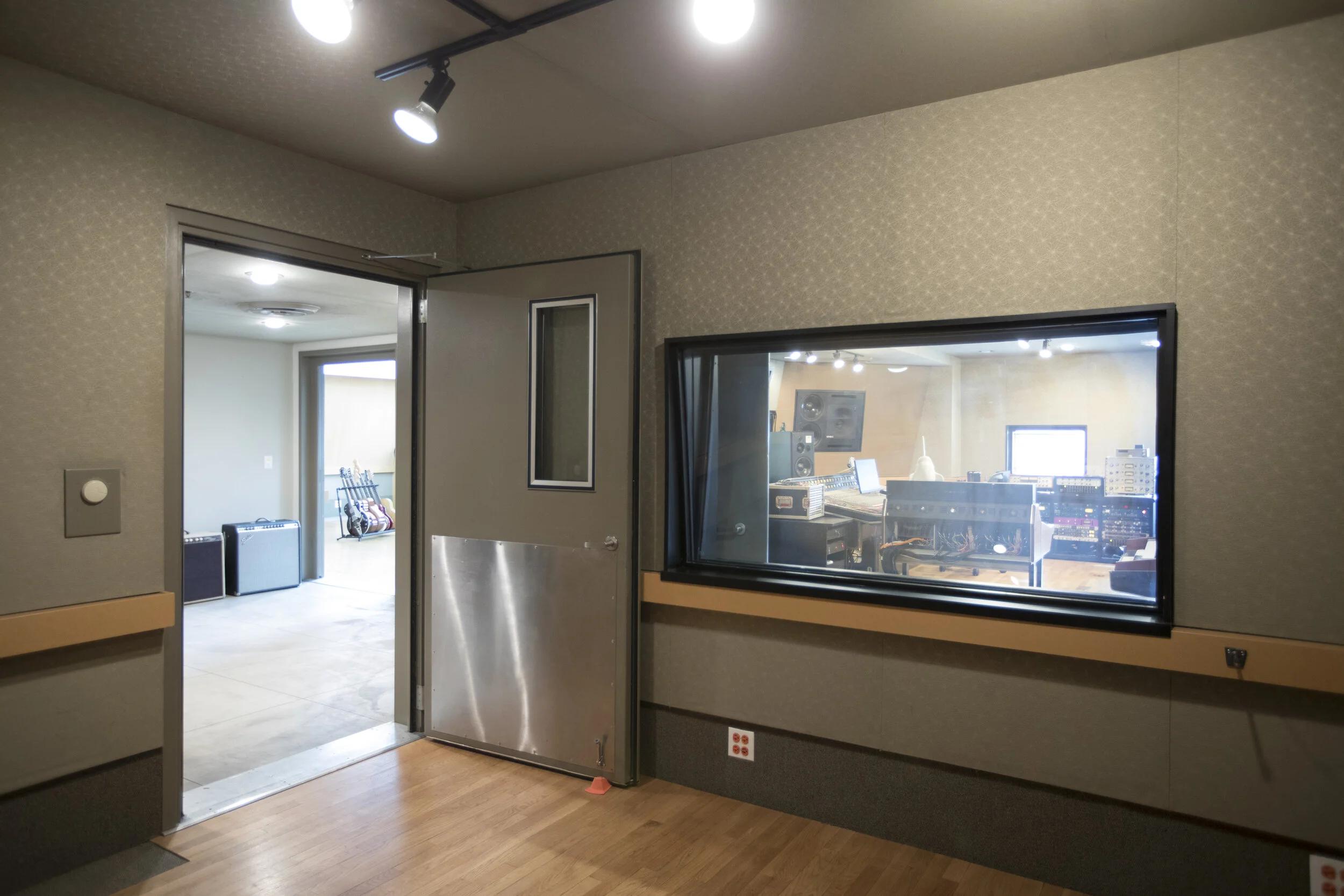
| Acoustic doors | STC/Rw 45–55 minimum; 50–55+ preferred |
| High-performance acoustic door | STC 55–60+ |
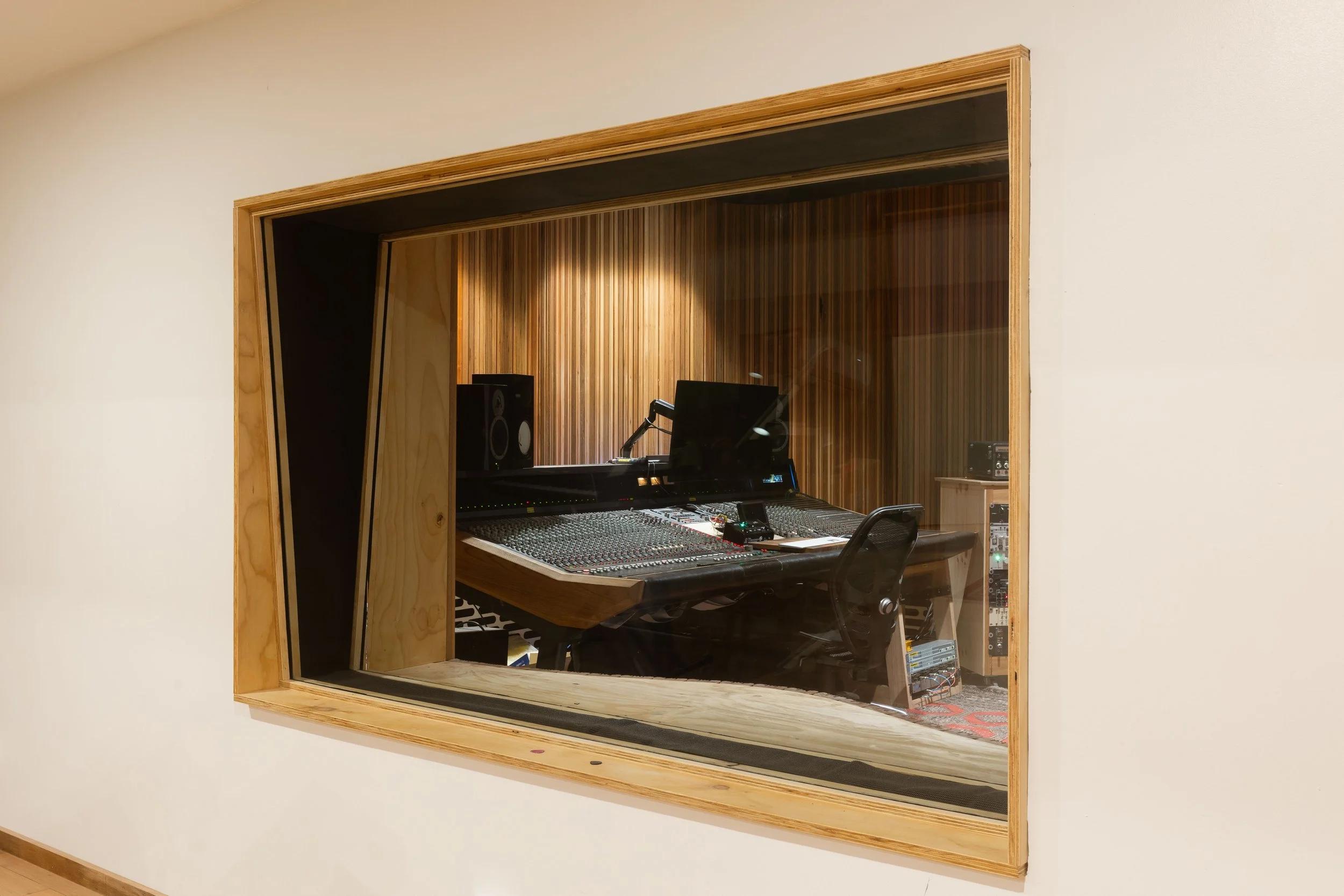
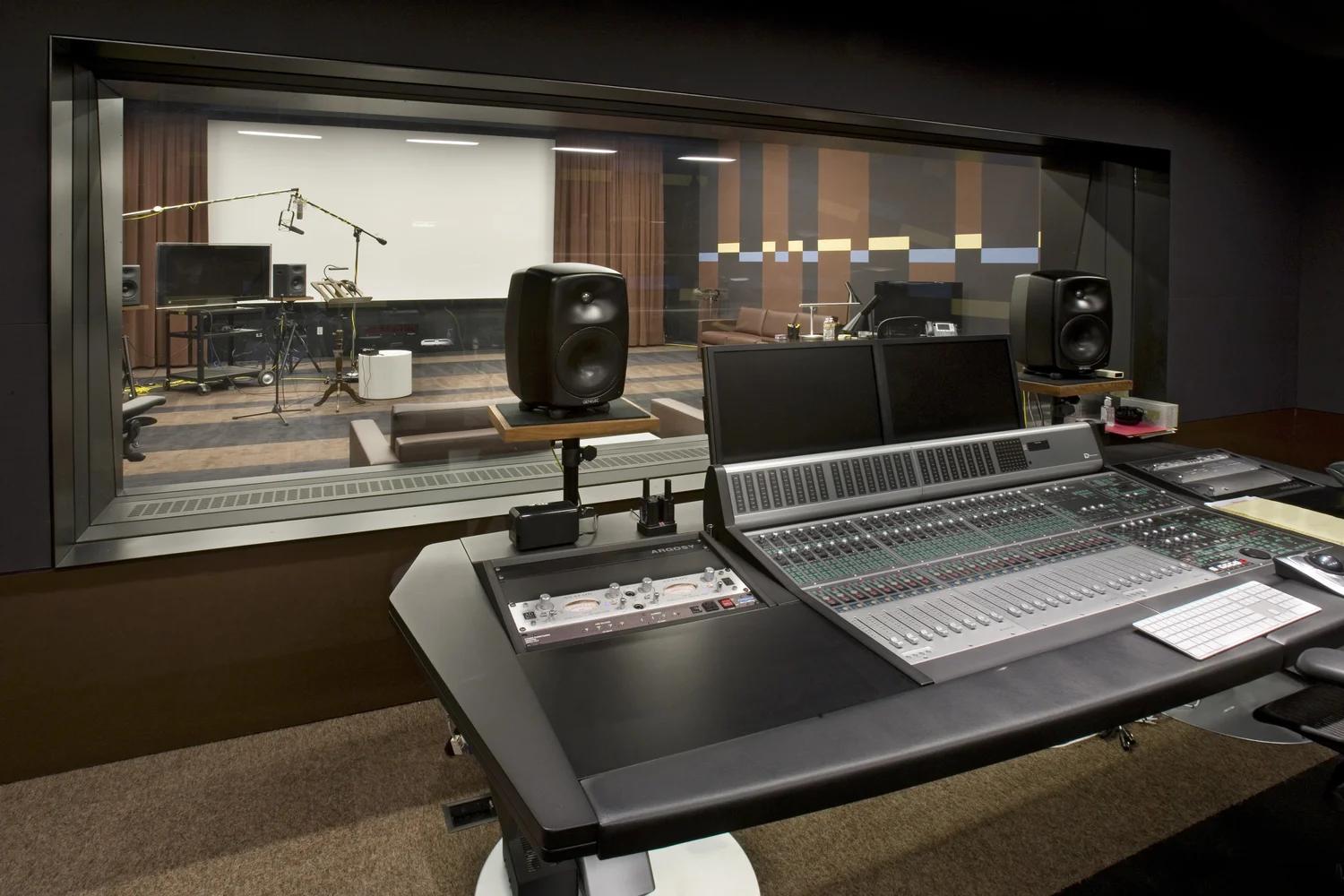
| Control-room glazing | STC/Rw 48–55+ |
| High-performance studio glazing | STC/Rw 50–55+ |
| Background noise | NC/NR 15–20, depending on room |
| Speech/news studio RT60 | approximately 0.25–0.40 s |
| Voice/audio booth RT60 | approximately 0.20–0.35 s |
| TV studio RT60 | approximately 0.30–0.60 s, depending on use |
Our recommended specification hierarchy for soundproofing
We divide the acoustic package into six layers:
LEVEL 1 — Structural isolation
- concrete/masonry
- independent framing
- box-in-box where required
- floating floors
- isolated ceilings
LEVEL 2 — Wall acoustic mass
- multiple gypsum-board layers
- acoustic damping compound
- mineral wool
- staggered/independent studs
LEVEL 3 — Openings
- STC 50–60 acoustic doors
- automatic door bottoms
- continuous seals
- acoustic frames
- STC/Rw 50–55+ studio glazing
LEVEL 4 — Services isolation
- HVAC silencers
- acoustic ductwork
- vibration isolation
- cable penetration seals
- pipe isolation
- electrical box treatment
LEVEL 5 — Room acoustics
- broadband absorbers
- bass traps
- ceiling treatment
- controlled diffusion
- acoustic carpet where appropriate
LEVEL 6 — Testing
- airborne sound isolation
- background noise
- NC/NR
- RT60
- HVAC noise
- commissioning report